
Rehab After Hip or Knee Surgery: Where Should Your Parent Go in RI?
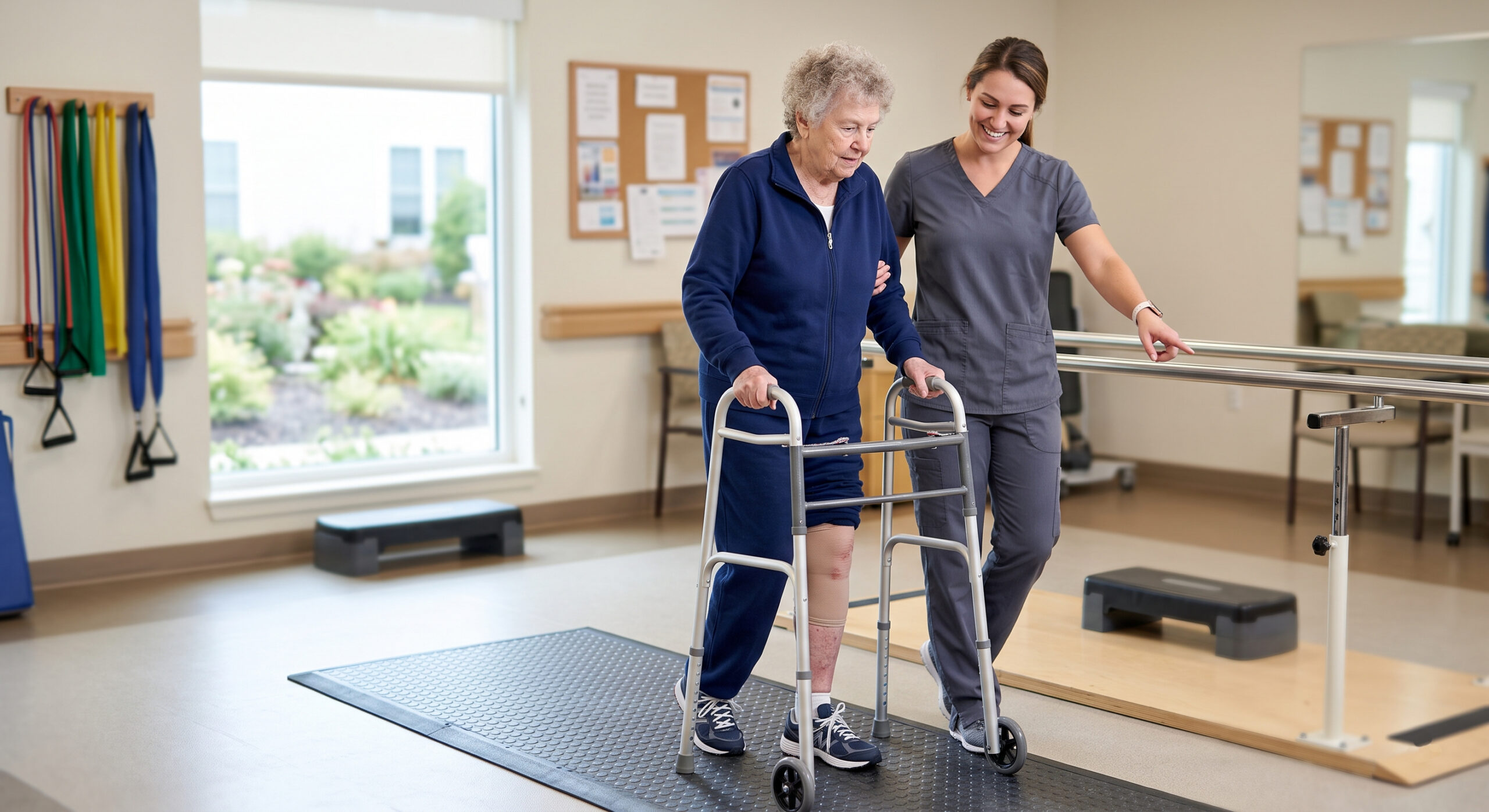
When a parent needs a hip or knee replacement, the surgery itself is often only the beginning. Families also need to think about what happens after the hospital stay, especially if their loved one is not yet ready to manage safely at home.
Choosing the right rehab after hip replacement can make the transition from hospital care to everyday life more manageable. For some older adults, returning home immediately may be appropriate.
Others may need short-term rehabilitation with nursing support, physical therapy, and occupational therapy. This additional care can help them manage daily activities safely before returning home.
The right setting depends on your parent’s medical needs, mobility, home environment, and recovery goals. In Rhode Island, families have several care options to consider. Understanding these differences can help you choose a setting that supports recovery, strength, and independence.
What is Rehab After Hip or Knee Replacement?
Rehab after hip or knee replacement is short-term care designed to help a person recover strength, mobility, balance, and independence after surgery. Depending on the individual’s needs, rehabilitation may take place at home or in an outpatient setting.
Some patients may need care in a skilled nursing and rehabilitation center. After joint replacement surgery, many patients begin moving and exercising soon after the procedure.
Physical therapy helps restore movement and strength, while occupational therapy can help patients safely manage everyday activities. Some people can complete this recovery at home, while others need additional nursing and therapy support before returning home.
A skilled nursing rehabilitation setting can provide this support in one place. Medicare explains that skilled nursing facilities can provide temporary rehabilitation after hospitalization. They can also provide medical treatment for patients recovering from an illness or injury.
Should Your Parent Go Home or to Short-Term Rehabilitation?
The best choice depends on how safely your parents can function after surgery. A parent who can walk safely and manage basic activities may be able to recover at home. This can work well when they can follow medical instructions and have reliable support.
Going home can be difficult when mobility is limited. Stairs, bathrooms, medications, and daily tasks may become challenging after joint replacement surgery.
Your parents may benefit from short-term rehabilitation if they need additional therapy, nursing oversight, or assistance with daily activities before returning home. A rehabilitation team can help identify progress and adjust the care plan as your parents become stronger.
The decision should also consider whether someone can provide dependable support at home. If family members work during the day or live far away, a short-term rehabilitation setting may provide a safer bridge between hospitalization and independent living.
What Should Families Look for in Rehab After Hip Replacement?
The right rehabilitation facility should provide more than therapy sessions. Families should look for a setting that combines skilled care, personalized rehabilitation, and clear recovery goals.
1. A Strong Rehabilitation Program
Physical therapy is a central part of recovery after hip and knee replacement. Therapy helps improve strength and mobility. It also supports better balance, endurance, and everyday activities.
Ask how often therapy is available and whether therapists work with residents on practical goals. The rehabilitation program should reflect the physician’s orders and the patient’s individual progress.
Saint Elizabeth Home in East Greenwich provides short-term rehabilitation with a dedicated rehabilitation gym. Its rehabilitation services include physical therapy, occupational therapy, and speech therapy when needed.
2. Nursing Support Alongside Therapy
Recovery does not involve therapy alone. Older adults may also need nursing support while they recover from surgery. A skilled nursing rehabilitation setting can combine nursing care with therapy services.
This can be particularly helpful when a parent needs assistance with medications, monitoring, mobility, personal care, or other medical needs during recovery.
At Saint Elizabeth Home, short-term rehabilitation patients receive support from registered nurses and licensed practical nurses. They also receive assistance from medication technicians and certified nursing assistants.
3. A Personalized Plan of Care
Every recovery is different. A parent who was active before surgery may progress differently from someone who entered surgery with limited strength or mobility. A good rehabilitation plan should consider the person’s condition and physician instructions. It should also address their therapy needs and recovery goals.
The plan should also change as the patient makes progress. Saint Elizabeth Community states that a plan of care is established by the care team upon admission. Length of stay varies based on individual needs, progress, and insurance coverage.
4. A Clear Path Back Home
The goal of short-term rehabilitation is usually not to keep your parents in a facility longer than necessary. The goal is to help them become strong and capable enough to return to the setting that is appropriate for them. Families should ask what specific goals their parents need to meet before discharge.
These might include walking safely, transferring between a bed and chair, using stairs, managing personal care, or following prescribed exercises. A clear discharge plan can also help families prepare the home before their parents return.
A strong rehabilitation program should support your parents throughout the recovery process. Families can consider therapy, nursing support, personalized care, and discharge planning. These factors can help them choose a setting that supports safe recovery and independence.
How Does Therapy Help After Hip or Knee Surgery?
Therapy helps patients rebuild the strength and mobility needed for daily life after joint replacement. This can include walking, standing, climbing stairs, dressing, bathing, and other routine activities. Physical therapists focus on movement, strength, balance, and endurance.
Occupational therapists help patients manage daily tasks and use adaptive equipment safely when needed. Recovery can vary based on age, overall health, strength before surgery, and the type of procedure. Regular exercise and gradual increases in activity are important, while guidance from the surgeon and therapy team can support a safer recovery.
Why the Rehabilitation Environment Matters?
The rehabilitation environment can affect how comfortable and confident a person feels during recovery. A supervised setting can help patients feel safer while working on mobility and daily activities. Patients can practice exercises, transfers, walking, and other tasks with support from trained staff.
This also reassures families while their parents work toward greater independence. Saint Elizabeth Home has a dedicated short-term rehabilitation area called The Hill. It includes a well-equipped rehabilitation room and supportive amenities.
When Should You Start Planning Rehab?
Families should begin planning rehabilitation before surgery whenever possible. Waiting until hospital discharge can create stress, especially when rehabilitation beds are limited.
Saint Elizabeth Community recommends notifying the admissions coordinator about an upcoming surgery or hospitalization and the possible need for short-term rehabilitation. Early planning also gives families time to review care options and insurance requirements.
Planning helps families determine the right level of support and prepare medical information. It also allows your parents to focus on recovery rather than making important care decisions after surgery.
What About Medicare Coverage for Rehabilitation?
Medicare Part A may cover skilled nursing facility care for eligible patients when specific conditions are met. Coverage generally requires a qualifying inpatient hospital stay, a medical need for daily skilled care, and care in a Medicare-certified skilled nursing facility.
Medicare also explains that skilled nursing care can include physical therapy and occupational therapy when those services are needed to meet the patient’s health goals. Coverage rules can vary depending on the person’s circumstances and insurance plan.
Medicare Advantage plans may have different requirements, including different rules about hospital stays and costs. Families should confirm coverage with Medicare, the health plan, the hospital, and the rehabilitation facility before making final arrangements.
Questions to Ask Before Choosing a Rehabilitation Facility
A comfortable facility is important, but families should also understand how it supports recovery. Ask about therapy, nursing care, staffing, and the patient’s individual needs. Families should also ask how the care plan is developed and how progress is communicated.
It is helpful to understand discharge goals, insurance coverage, and how the facility prepares patients to return home. These questions can help families compare rehabilitation facilities based on their parent’s needs. They also help families look beyond location and appearance when making a decision.
Why Families May Consider Saint Elizabeth Home
Saint Elizabeth Home in East Greenwich provides short-term rehabilitation alongside long-term care and memory care. The community has 34 short-term rehabilitation beds and a fully equipped rehabilitation gym.
The rehabilitation team includes physical, occupational, and speech therapists. Nursing support is provided by registered nurses, licensed practical nurses, medication technicians, and certified nursing assistants. Rehabilitation services are available seven days a week.
Care plans are developed around each patient’s needs and progress, while Saint Elizabeth Community’s nonprofit mission focuses on supporting older adults.
If your parents are preparing for hip or knee replacement in Rhode Island, consider discussing rehabilitation options before the procedure. Early planning can help reduce stress when discharge approaches.
Contact Saint Elizabeth Community to explore short-term rehabilitation options for your parents. The care team can help your family understand the next steps based on your parent’s recovery needs.
Frequently Asked Questions
Can my parents go directly from the hospital to rehabilitation?
Yes. A hospital can help coordinate a transition to short-term rehabilitation when your parents need continued skilled care after surgery.
What happens during the first few days of rehabilitation?
The care team assesses your parent’s condition, mobility, and daily needs. They then establish a care plan based on recovery goals.
Can family members participate in the rehabilitation process?
Yes. Families can communicate with the care team, stay informed about progress, and help prepare for their parent’s return home.
What if my parents are not progressing as expected?
The care team can reassess the rehabilitation plan and adjust services based on your parent’s changing needs and progress.
What should my parents bring to rehabilitation after surgery?
Bring current medications or medication information, comfortable clothing, supportive footwear, personal items, and important medical documents.